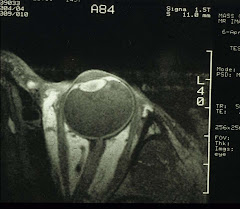
Saturday, May 17, 2008

8.2 NMR

One wonders if both Felix Purcell (1912-1997) and Edward Bloch (1905-1983) had experimented with magnets (see above) when they were little. They did, however, share the Nobel Prize in Physics in 1952 for independently creating experiments for the observation of NMR (nuclear magnetic resonance).

The growth of NMR research especially in the past two decades is nothing short of spectacular. It is a field driven entirely by the magnetic field strength (B0) which determines the operational frequency or Lamor frequency (ω0) of the NMR nuclei. The equation central to NMR research is this:
ω0 = γB0

γ is of course the immutable gyromagnetic ratio (or magnetogyro ratio - depending on whether you are a physicist or a chemist) unique to each NMR nucleus. The table below is a quick glance of the Larmor Frequency at a field strength of 1 Tesla (last column on the right):

ParticleSpin
wLarmor/B
s-1T-1
n/B
Electron
1/2
1.7608 x 10¹¹
28.025 GHz/T
Proton
1/2
2.6753 x 10⁸
42.5781 MHz/T
Deuteron
1
0.4107 x 10⁸
6.5357 MHz/T
Neutron
1/2
1.8326 x 10⁸
29.1667 MHz/T
23Na
3/2
0.7076 x 10⁸
11.2618 MHz/T
31P
1/2
1.0829 x 10⁸
17.2349 MHz/T
14N
1
0.1935 x 10⁸
3.08 MHz/T
13C
1/2
0.6729 x 10⁸
10.71 MHz/T
19F
1/2
2.518 x 10⁸
40.08 MHz/T
(Note: the study of electron spin is ESR - Electron Spin Resonance or now known as EPR - Electron Paramagnetic Resonance - an entirely different ballgame from NMR)

In the old days, field strength was represented by proton frequency. For example: what was a 400MHz (or megacycle) magnet is now known as a (400/42.5781=)9.4 Tesla magnet. Because of the notoriously low sensitivity of NMR nuclei, much improvement in signal generation relies on increasing the magnetic field strength. The higher the field strength, the more the signal intensity (or higher signal-to-noise ratio). For example, for proton, an increase from 300 to 400MHz yields an improvement in S/N of (400/300)2 = 1.78 fold. Building ultra-high-field magnets is a competitive sport for the manufacturers of course.

What are these NMR nuclei? Well, any nucleus with an odd number of protons or neutrons (or combination) qualifies; for example, biologically relevant nuclei include 13C, 31P, 1H (proton), 23Na, 17O, 15N, 19F, and deuterium (a nucleus with spin number I=1). Of these, 31P and 23Na are both 100%, and 1H 99.98% naturally abundant. The others are only a fraction of around 1% or less and are usually used as labels; for example, 13C can be labeled at either C-1 or C-6 position of glucose and the glycolytic products can thus be traced. On the other hand, proton is part of the ubiquitous water molecule, and 31P that of ATP and other organophosphates.

All these nuclei when placed in a magnetic field will precess at certain ω0: depending on the γ of each nucleus, as mentioned above:
(From: teaching.shu.ac.uk/hwb/chemistry/tutorials/molspec/nmr1.htm)

If a radiofrequency (rf) perpendicular to the north-south direction, or conventionally, the z-axis of the magnetic field is applied at the frequency of a nucleus of interest, then this nucleus will be tipped into the x-y plane. When the rf is turned off, the nucleus will begin to return to its original ground state through a process, known as relaxation. Relaxation is defined by longitudinal relaxation time (T1) and transverse relaxation time (T2). And the signals produced in the rf field are known as the FIDs (free induction decays) which can be picked up by an antenna and processed (through Fourier Transform from time into frequency domain) to generate NMR spectra.
(Note: No Bruker share-holders here)

The above is a typical high-field vertical-bore superconducting magnet used in NMR spectroscopy. It requires periodic feeding of liquid nitrogen and liquid helium. A probe is inserted from the bottom and the sample (in an NMR tube) loaded from the top, controlled by compressed air. A computer console is situated nearby for shimming, pulse sequence delivery, signal collection, spectral generation and printing.

An NMR probe is the heart of the spectrometer, it fits vertically into the bore of the magnet. They come in different bore sizes as well, e.g., 2, 5, 10, and 20mm diameters are common. These probes can be broadband or single frequency.

Before insertion, it needs to be optimized by using tuning and matching rods with the aid of an oscilloscope. Tuning is simply to make sure the probe is set to the frequency of interest. And matching is to ensure the impedance is equal to the external electronic circuitry so that maximal power can be transferred. These two operations are actually inter-related:

Shimming is an art, its purpose is to maximize the magnetic field homogeneity which greatly affects spectral resolution. Some "NMR jocks" are known to take extraordinarily long time (e.g., forever) to shim the magnet - to perfection. And a lot of them know how to read the FIDs even before FT. The resulting spectra are often strikingly well-resolved. NMR jocks are a special breed. Much like computer hackers, NMR jocks also survive on pizza and coke, except the food and drink are paid for with cash, as their credit cards are usually erased by the magnets. (Try and explain this to the pizzeria owners.)

Next, we will examine a few examples of NMR spectroscopy of ocular tissues - before entering the field of MRI (magnetic resonance imaging).

Tuesday, May 13, 2008

8.1 Brain is an extension of the eyes

(The visual pathway - looking from the base of the brain)

The visual pathway of course travels all the way from the eyes to the back of the brain (see above, in red). Anything untoward that occurs along the pathway will manifest as an ophthalmic problem. And in addition to the second cranial nerve, the extraocular muscles are innervated by the third, 4th and 6th cranial nerves. Plus, the pupillary responses are controlled by yet another set of nervous pathway. Neuro-ophthalmology is indeed a very interesting and challenging field. With very simple tools, such as a penlight, an occluder, a tangent screen and/or perimeter, definitive diagnosis often can be reached. With time, more tools become available. And brain imaging is now consisted of many modalities:

(From socialfiction.org)

These modalities include the old standby CT, the re-vamped PET, the anatomical MRI and the more powerful fMRI (f=functional), and a close relative of fMRI, the Optical Imaging of Intrinsic Signals (OIS). (Note: Cryo is imaging of frozen brain in slices, not for the living.)

Of these, we will go into more about MRI, in order to discuss important subjects such as "perivenous syndrome" and "brain plasticity". And to understand MRI, we will need to start from its humble beginning, NMR. Next post is therefore "8.2 NMR".

Saturday, May 10, 2008

Happy Mother's Day

a Happy Mother's Day to All

To my Burmese friends, SA and Moe: Hope you and your families are all OK.

Update (12 May 2008): Please remember the earthquake victims in Sichuan, China

Sunday, May 4, 2008

7.33 Too much oxygen?

The magnificent Brooklyn Bridge, the 5,989-ft long suspension bridge linking Brooklyn and Manhattan, opened for business on May 24, 1883, after 13 years of construction. To lay the foundation, the workers must work in caissons under the East River, with compressed air pumped in from the surface. A lot of workers suffered from decompression diseases, i.e., the "bends" which also afflict deep-sea divers if the decompression rate was too fast. Air bubbles are trapped especially in the joints causing severe pains and injuries. However, no one seemed to have complained of blurred vision during that time. Perhaps in a harsh working environment, vision was not a first priority issue. In fact, the complaint of blurred vision should probably have been noted and registered.

A 2002 report in Japan indeed shows myopia in some workers after completing 11 weeks (4 days/week) of work in pneumatic caissons. When they were examined 6 months later, a recovery towards hyperopia was found. The speculation was that this transient myopia was caused by excessive oxygen which somehow altered the structure(s) of the eye. In fact, the same myopia shift has been found in patients undergoing hyperbaric oxygen therapy.

(The inside of a hyperbaric chamber - from hyperchamber.com)
Hyperbaric oxygen therapy has a long history. It started as a treatment for the bends and logically for carbon monoxide poisoning. Now it is used to promote wound-healing and inhibit recalcitrant anaerobic bacterial infection (for example, in gangrenes). In another 2002 publication in Acta Ophthalmologica Scandinavica, with a regimen of 95-min sessions at > 95% oxygen at 2.5 atmospheres given daily Monday to Friday for a total of 30 sessions, the patients exhibited a 0.58D of myopia shift. There was no change in the axial length; although a "minimal" yet significant change in keratometric readings was noted. The investigators suspected alterations in lenticular refractive index and/or curvatures.

And in a 2006 case report from Norway: A 58-year-old man showed a hypermetropic shift, which followed the myopic shift after each of two series of treatments. The maximal refractive amplitude was 3.00 D (range -1.37 D to +1.62 D) in the right eye and 2.75 D (range -1.25 D to + 1.50 D) in the left eye. And refraction stabilized after 1.5 years to pretreatment values.

So what's going on? Given the paucity of experimental data, a reasonable speculation is a change principally in the refractive index of the lens nucleus.The best approach is probably photo-documentation with a Scheimpflug camera supplemented with ultrasound A-scan, corneal topography, and cycloplegic refraction. Scheimpflug images allow lens density as well as anterior lens thickness determination:

Some investigators have proposed that the high oxygen might have caused protein aggregation in the lens nucleus, as part of the oxidative damage, hence the increase in the refractive index. However, by and large, changes in lens protein structure are irreversible. This does not agree with the transient nature of the myopia. Alternatively, it may just be a simple increase in lens thickness owing to an increasing intake of sodium and/or loss of potassium, i.e., an ionic pump malfunction from oxygen toxicity.

All guesses. Someone out there should pick up this project.

Monday, April 28, 2008

7.32 Nutritional glaucoma

The above is Mexican poppy (botanically: Argemone mexicana) or Satyanashi. Its seeds give out a poisonous oil, the argemone oil (aka the katkar oil), which is indistinguishable from dark mustard oil.

In northern India, mustard oil is used for cooking. If some unscrupulous merchants were to adulter mustard oil with argemone oil, then an epidemic poisoning would ensue (known as Epidemic Dropsy). In fact, the first case was reported in Bombay in 1877. And more recently in Delhi in 1998 when 2,552 cases were reported and 65 died.

Sanguinarine, one of the 2 alkaloids found in argemone oil causes dilation of blood vessels/capillaries. The patients suffer general edema (i.e., dropsy) owing to leakage of plasma into the surrounding tissues. This leakage also involves the blood vessels of the uvea, thereby hindering the uveal outflow. As a result, a special form of glaucoma develops, which persists even after the poison is excluded that often requires medical/surgical intervention.

Fortunately, Epidemic Dropsy is largely a thing of the past. However, nutritional glaucoma can appear in a totally unexpected manner. In a recent case reported in Taiwan (March, 2008), a 40-year-old lady developed blurred vision with high IOP (30mmHg) - after a one-root-per-day consumption of ginseng for one month. Medicinal ginseng is quite expensive, in fact, not everyone can afford such a regimen. So, there is no epidemic here. It was speculated that high-dose ginseng might have altered the viscosity of the aqueous humor causing a sluggish outflow.
(Korean ginseng, the ones with the highest quality - the"天字第一號 (Heaven No 1)" - can fetch USD10,000 per root.)

After the ginseng runs its cause, recovery, most likely total, is expected for this particular patient. Follow-ups are of course recommended.

Sometimes the eye doctors must connect the dots and become a capable medical sleuth.

Sunday, April 6, 2008

7.31 Couching

The above is the cover page of a 17th Century reprint of one of the Chinese ophthalmology textbooks, written presumably by Sun Shi Ni (孫思邈) in 682AD. In which, a form of cataract surgery, known as couching with a golden needle (金针拨障术), was laid out in great detail.

During the Tang Dynasty (618-907AD), this technique was practiced by physicians from India. And it was apparently quite well-accepted. In fact, Poet Bai Ju Yi (白居易, 772-846) was known to mull over whether to have his cataracts treated medically or surgically:
"案上漫铺龙树论,合中虚贮决明丸.人间方药应无益,争得金蓖试刮看."
(On my desk, there is this ophthalmology book,龙树论, next to it a box of pills, 决明丸. If the pills do not work, I'd have to go under the golden needle, 金蓖, quick.)

And around the same time, Philosopher Liu Yu Xi (刘禹锡, 772-842) wrote a thank-you poem to his cataract surgeon, a monk-ophthalmologist from India:
"看朱渐成碧,羞日不禁风.师有金蓖术,如何为发蒙."
(Everything red is turning blue, I am now also photophobic and sensitive to the wind. Thank you for the couching needles, how that cut through my fogginess.)

Couching of cataracts with a needle was reported by a Hindu surgeon Susruta at around 5th Century BC. The triangular lancet (for corneal incision) and the couching needles are shown here:
You can almost find some similarities to modern-day instruments for ophthalmic surgery:
Is the procedure safe? Relatively speaking, yes. Wounds from, e.g., paracentesis (puncture of the peripheral cornea with a needle, usually to withdraw some aqueous humor), or small-incision cataract surgery rarely require sutures. The corneas self-heal. And if the cataractous lens stays in one piece, with little or no injuries to the iris or the ciliary body. The outcome can be quite favorable. However, in most cases, the complication rates can reach as high as 50%.

One might imagine that couching was performed under unsanitary conditions. By modern-day standards, most likely yes. Yet in the Synopsis of Ophthalmology (目经大成) compiled by Huang Ting Jin (黄庭镜) in 1774, the procedures listed eight steps. And the very first one called for a thorough cleansing of the surgical area around the eye.

In areas with no access to formally-trained surgeons and operating facilities, or for simple economical reasons, couching is still being practiced today. In a 2001 review of the surgical outcome of 1,274 eyes in a rural area of China, it was found that with proper post-op care, couching was no less efficacious than extra-cap surgery. In fact, the prevalence of blindness dropped from 5 to 2% and low vision from 24 to 6%. The key is then post-op care. However, in remote areas of, e.g., West Africa, couching as practiced by traditional healers, even the safety maybe compromised.

There is such a long Sino-Indian history of cataract couching. It is therefore mystifying to note a Yale-educated missionary doctor practicing in China, Peter Parker, MD (1804-1888), who wrote that

"Diseases of the eye were selected as those the most common in China [in the late Qing Era]; and being a class in which the native practitioners were most impotent, the cures, it was supposed, would be as much appreciated as any other."

And one of his more successful "cures" was none other than cataract couching, the very same technique practiced by Susruta and his followers throughout the ages, on different continents, and in many cultures including China.

To complete the discussion, couching can be either sharp (more common, with a needle) or blunt (by massaging the anterior portion of the cataractous eye). Blunt couching works only if the lens zonules are almost all disrupted.

Tuesday, March 25, 2008

7.30 Poetic review

It has been stated: "Science is for those who learn; poetry, for those who know." ~Joseph Roux (1725-1793), Meditations of a Parish Priest

Such a great topic for fMRI study of the brain, too. Perhaps when they think, scientists and poets activate different areas of their brains, and the areas do not usually overlap. If true, then Galileo would not have been able to do the following:

"If Galileo had said in verse that the world moved, the inquisition might have let him alone." ~Thomas Hardy OM (1840-1928)

Often the progress in science results in unintended cultural consequences. A good example is cited here:
The above is a poem celebrating the mid-autumn moon. It was written by Su Shi (蘇軾,1037-1101) invoking the Chinese folklore of Chang-Er (嫦蛾) who flew to and resided on the moon - after eating a Heavenly Peach. In 1969, Neil Armstrong's a "giant leap for mankind" moon-landing spoiled it for all, forever.
This poem still retains its popularity; however, now only the last stanza makes sense, i.e., the moon is seen/shared by all even if they are separated by a vast distance.

The eye in fact figures prominently in numerous poems. Let's see if science has changed anything. We'll now try some American poems:

"Thy fingers make early flowers" by e. e. cummings (1894-1962):
thy whitest feet crisply are straying.
Always
thy moist eyes are at kisses playing,
whose strangeness much
says; singing
(though love be a day)
for which girl art thou flowers bringing?

Moist eyes, huh? See "4.4 Dry eye" and "4.10 Itchy eyes" to understand why some eyes are overly "moist".

"Dust in the Eyes" by Robert Frost (1874-1963):
If, as they say, some dust thrown in my eyes
Will keep my talk from getting overwise,
I'm not the one for putting off the proof.
Let it be overwhelming, off a roof
And round a corner, blizzard snow for dust,
And blind me to a standstill if it must.

The immediate physiological response to dust in the eyes is profuse tearing. This condition often requires flushing the eyes with water or normal saline. Prophylactic antibiotic/anti-inflammatory eyedrops may be needed as well. And if the dust happens to be alkaline in nature, e.g., lime, a quick referral to an eye doctor is not an overwise next move. (On the other hand, blinding snow is obviously harmless, unless you are driving on I-93 North.) For more, see "7.17 Wink, wink".

Some poems about death and the eye are downright spooky:

"I’ve seen a dying eye" by Emily Dickinson (1830-1886):
I've seen a dying eye
Run round and round a room
In search of something, as it seemed,
Then cloudier become;
And then, obscure with fog,
And then be soldered down,
Without disclosing what it be,
'T were blessed to have seen.


Corneal edema immediately before death? This is quite unlikely. Fresh fish have clear eyes which become cloudy with prolonged storage on ice - perhaps this is what Dickinson was referring to? See also: "7.1 Cold fish eye".

"The Hollow Men" by T.S. Eliot (1888-1965):
The eyes are not here
There are no eyes here

In this valley of dying stars
In this hollow valley
This broken jaw of our lost kingdoms
In this last of meeting places
We grope together
And avoid speech
Gathered on this beach of the tumid river
Sightless, unless
The eyes reappear
As the perpetual star
Multifoliate rose
Of death’s twilight kingdom
The hope only
Of empty men.


Transplanting the whole eyes? See "7.21 Never say never?" for details. Plus "7.8 Now you see it, now you don't" just to cover all grounds.

What about poems from the East?

"Fallen flowers" by Li Shan Yin (李商隱, 812/3 - 858AD):
高閣客竟去, 小園花亂飛 (My best friend has just left, the flowers are flying/dispersing in the small garden)
參差連曲陌, 迢遞送斜暉 (From the tortuous paths, I now send off the evening sun)
腸斷未忍掃, 眼穿仍欲歸 (Too sad to sweep off the fallen flowers, still hoping to see the friend's return)
芳心向春盡, 所得是沾衣 (My heart is broken as the abrupt end of Spring, only the petals remain on my clothing)

It can be an accommodation/focusing issue to see so intently. See "7.20 Mr Sulu, take us home" for explanation.

"Wan Shi Sa (浣溪沙)" by Wang Guo Wei (王国维, 1877-1927):
山寺微茫背夕曛,鸟飞不到半山昏.上方孤罄定行云. (In the dim dusk, it was hard to make out the temple, for the birds to fly half-way up the hill; the fleeing clouds were anchored in place by a lone prayer drum)
试上高峰窥皓月,偶开
天眼觑红尘,可怜身是眼中人. (I tried to climb up to the mountaintop to peek at the luminous moon, in a blink of the heaven's eye, I could see the world, and realized sadly that I was also part of this world.)

Heaven's eye? The Hubble telescope? Maybe this:
For less powerful telescopes, see "7.27 Thousand mile eye".

Clearly, the word "eye" sets off a reaction of clinical interpretation that overtakes the entire poetry. Essentially, the one-tracked mind at work. Although, we suppose Carl Sandburg (1878-1967) was being honest who said, "I've written some poetry I don't understand myself."

More to the point, though, is this:
"You can't write poetry on the computer." ~Quentin Tarantino (1963-present)
(Much less translate.)

In any case, we now call for an fMRI brain study. Poets are invited.