Friday, December 5, 2008

9.11 Lobster eyes

On the left is a normal 2-clawed Maine lobster. Newport Daily News (12/3/2008) reports that a 1.5-lb 4-clawed lady lobster is caught this week by a Mr Patrick Marks in the waters 60 miles south of Newport, RI. It has one crusher claw and three pincher claws, all functional. After showing it off most of the day, Mr Marks let her go, explaining that he "sometimes lets lobsters go out of guilt when they look at him funny."

Yes!! Lobster vision at work.

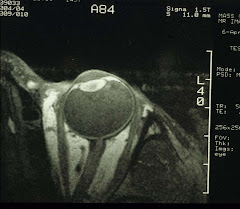
Lobster eyes are structurally very different from that of other animals (including the mantis shrimp). The cornea actually contains an array of mirror-like reflectors, each arranged at a specific angle, that ultimately focus incoming light rays onto the retina.

The optics is reflection rather than the more conventional refraction.

Presumably in the dim deep sea where sharp vision is less important than acute sense of smell and touch, the lobsters do not rely on vision to hunt, they only need to detect motion.

Under bright lights, the lobsters probably cannot not see much as everything is blended into the background and "washed out". Lights reflected from their eyes, on the other hand, will give you an impression that you are being stared at, inquisitively. If you were a lobsterman, you'd probably let them go, too.

Earlier this summer, another 4-clawed lobster was caught by a Mr Jimmy Whitty based in Morell, PEI, Canada. It was nicknamed Mothra and kept in an aquarium at a restaurant. It was, alas, lost to follow-up.

And in Taiwan (local news, 11/25/2008, reported in www.nownews.com), fisherman Mr Chen caught a 3-kg male crab with a 50-cm "wing" span, estimated at 10 years old, at the mouth of Chen-wen Brook in Tainan Hsien (台南曾文溪河口). When caught with a net, it protested loudly with a hissing sound, fought gallantly with its claws, and with the eyes extending from the protective grooves, it was looking to escape at the same time. Mr Chen eventually let him go, so it can continue to propagate.

Wednesday, November 26, 2008

The first Thanksgiving

(In November of 1621) when the Wampanoags helped the Pilgrims (who had arrived on the Mayflower, in 1620) bring in their first crop in the new world, there was a great feast during that harvest time. According to the Pilgrims, about 90 Wampanoags crashed the party and brought with them all sorts of delicacies. The Wampanoags usually celebrated their harvests, with food and rejoicing. They brought venison (deer meat), wild turkey, rabbit, woodchuck, lobster, clams, mussels, potatoes, sea bass, bluefish and many other delicious foods. Wampanogas also brought corn, beans, and squash to the feast, and even showed the Pilgrims how to cook the food. The Pilgrims were very appreciative of the gifts, and the 90 Wampanoags who crashed the party had a wonderful time (extracted from http://content.scholastic.com/browse/article.jsp?id=7587).

Thanksgiving is celebrated in the US on the 4th Thursday of November every year. Happy Thanksgiving !!

Friday, November 21, 2008

9.10 Eye popping

Occasionally, patients claim they can do "crazy" things with their eyes. One of them can indeed move her eyes independently, for example. So much for coordinated binocularity. A burning question is: Can the eyes actually pop out of the eye sockets. The video below answers the question in part. It shows voluntary globe luxation, another of those crazy things, which presumably is a painless maneuver. Strictly speaking, it is a form of exophthalmos. Exophthalmos, as we all know, is most commonly seen in Graves disease.

Warning: The following video is a bit on the gruesome side:


(Click on arrow to start the video)

There are all kinds of catastrophic injuries involving the whole eyeglobes. One of them has the eyeball hanging outside of the socket with the eyelids closing behind the eyeball. This is not a pleasant topic; however, from the eyecare point of view, a review is still necessary.

As far as this type of involuntary eye popping, there are two varieties: (1) traumatic avulsion of the globe and (2) traumatic globe luxation. The difference between the two is really the extent of the damages: avulsion involves completely or partially severed extraocular muscles and the optic nerve, whereas in luxation, the muscles and the optic nerve are retained (hence a potentially total recovery after proper care). Luxation can be from a simple act of sneezing - often the patient has shallow eye sockets and weak ligaments.

With globe avulsion, there is very little or in fact zero chance of sight restoration. The 1999 movie, Oliver Stone's Any Given Sunday, has a scene that depicts some hapless football player's eyeball flying across the end-zone when tackled. This is actually probable despite common disbelief. There were indeed incidences of such injuries from through-the-windshield car accidents and blow-to-the-head martial-art competitions.

Perhaps the most disturbing are reports of eyeballs hanging by the threads (i.e., remnants of the optic nerve) in many A-bomb victims in Hiroshima on Aug 6, 1945. The blast force was a "mere" 15 kilo-tons, far less than the warheads in the arsenals of super-powers today, e.g., 300 kT. Destruction on such a scale is beyond imagination/comprehension. Let's not even try.

Tuesday, November 11, 2008

9.9 One-eyed dragons

Ah, yes, this 1956 movie based on Leo Tolstoy's epic tome of the same title. And Audrey Hepburn (1929-1993) remains a perennial favor of many movie fans all over the world, even today.

One of the supporting characters in the movie, while in fact the chief architect of the Moscow defense, or more accurately, the Non-Defender of Moscow, General Mikhail Kutuzov had lost his right eye to head injuries, sustained while fighting against the Turks early in his career.

In 1812, France invaded Russia. With Kutuzov's scorched-earth strategy, Napoleon entered a deserted Moscow. His Grand Armée eventually succumbed to the bitter winter. Of the 450,000 men, only 10,000 returned to France, barely alive.

There were a few one-eyed generals. In the Eastern culture, they are known as one-eyed dragons (or 独眼竜 in Japanese and 獨眼龍 in Chinese). In the Chinese Red Army, there was General Liu Po-cheng (劉伯承, 1892-1986) who had also lost his right eye to a bullet wound. He led successful guerrilla warfare against the Nationalist Army in the late 1940s.

Beyond military operations, and far more interesting is the founding of Sendai City (仙台市) in the Northeast region of Japan in 1600 by Lord Da-Té Masa-Mu-né (伊達 政宗, 1567-1636) who had also lost one eye. The right eye, of course.
In this case, however, the loss was not owing to war injuries but to an eye infection of unknown etiology. Some proposed small pox, others claim that he later gouged out his diseased eye on purpose. And it is doubtful that any anesthetic was used at that time.

Lord Daté was a patron of Christianity in Japan. He actually built sea-worthy ships and with which, sent emissaries to Rome to establish diplomatic relations with the Pope. Five members of the expedition stayed in Coria (now Seville) in Spain to avoid religious persecution ordered by the Tokugawa government back home. The descendants adopted a last name "Japón" who now number 600+.

It would appear that generals who had lost their right eyes were great visionaries.

To make the story complete, the earliest known one-eyed general was Antigonus I Monophthalmus (382BC - 301BC) under the command of Alexander the Great. Unfortunately, it is unknown as to which eye he had lost. Judging from his life-long military successes, probably the right eye as well. He finally lost a battle at age 81, killed by a javelin.

King Philip II (360-336BC, father of Alexander the Great) also had lost his right eye, but then he was not a general.

Tuesday, October 21, 2008

Happy Halloween!!

It is that time of the year again... Temperatures start to drop. Leaves begin to turn colors and fall on the ground. And in the early evening of Oct 31, kids from around the neighborhood, dressed up as little goblins and ghouls, come and ring your doorbell. They'll yell "Trick or treat!!" when you open the door, and gleefully collect candies from your hands. [Mental note: one of them has peanut allergies.]

And a Jack-o'-lantern on your porch? Yes, a tradition around here in the Northeast (or wherever modern-day Celts congregate).

Why are the eyes triangular in shape? No one really knows. Maybe the all-seeing eye housed in a pyramid, an icon of the Freemasons, can tell us.


A Happy Halloween to all!!

Monday, October 6, 2008

9.8 Baby formula

By now, 53,000 babies in China have been sickened by melamine-tainted milk and 4 have already died (left: a baby holding a can of Sanlu powdered milk). And milk products from China are now banned in many countries around the World.

Ideally, there should not be any melamine in any food anywhere. Unfortunately, melamine is ubiquitous. Chances are the favorite plastic dish/cup of yours or the counter top in your kitchen was made in part from melamine. The upper safety limit in food set by both the EU and the US is now 2.5 ppm (or 2.5 mg/kg). For babies, 1 ppm in China [in Taiwan, the upper limit for powder milk for babies is at a far more stringent 0.05 ppm]. In the US, the tolerable daily intake is set, for now, at 0.63 mg/kg body weight/day.

Let's do some simple math: Assuming you weigh 50 kg, the daily melamine limit is then 0.63 x 50 = 31.5 mg. Then even if you consume 31.5/2.5 = 12.6 kg of milk powder everyday, it is still "safe". And for a 12-month-old baby weighing 10 kg at the 1 ppm limit, it'll be a 1 kg consumption per day - still quite a lot of milk. Unfortunately, the melamine content in Sanlu powdered milk putatively was as high as a mind-boggling 2,560 ppm. So forget the math, the stuff is highly toxic all right.

The most logical alternative to powdered cow milk is of course mother's milk. While this may not always be possible, for those making the switch, more about milk and the eyes:

The following are extracted from an interesting article by Hoffman et al: "Maturation of visual acuity is accelerated in breast-fed term infants fed baby food containing DHA-enriched egg yolk". J Nutr 134:2307-2313, 2004:

The authors divided 6-month-old breast-feeding babies into two groups: (1) the DHA group that received each day, one jar of baby food (113 g) containing egg yolk enriched with 115 mg/100 g DHA (docosahexaenoic acid) and (2) the same but no DHA (i.e., the control group).

Both groups continued to breast-feed for a mean of 9 months. In the control group, the red cell DHA levels decreased significantly between 6 and 12 months (from 3.8 to 3.0 g/100 g total fatty acids), whereas in the DHA group, the levels increased from 4.1 to 5.5 g/100 g.

VEP (visually evoked response) acuity at 6 months was 0.49 logMAR (minimum angle of resolution) which improved to 0.29 logMAR by 12 months in the control group. In the DHA group, VEP acuity was 0.48 logMAR at 6 months and which matured to 0.14 logMAR at 12 months. In other words, 1.5 lines (on the eye chart) better visual acuity than the controls. So an adequate dietary supply of DHA throughout the first year of life maybe necessary for visual maturation. The stereo-acuity on the other hand was not affected by DHA.

Interestingly, DHA concentration in human milk varies from as little as 0.1% of total fatty acids in women on Western diets to as much as 1.4% in Inuit women in North America and 2.78% in Chinese women from a fishing village, both of the latter consumed large amounts of marine animal foods.

Hmm... So the old-wives' tale of "fish is brain food", by way of DHA, is quite profound and is actually scientifically accurate! [We don't need to repeat that the brain is the extension of the eyes, do we.]


Saturday, September 20, 2008

9.7 Beethoven's Symphony No 9 in D-minor

It is a well-known story: When his 9th (the Choral) Symphony premiered on May 7, 1824, in the Kärntnertortheater in Vienna, the audience went wild. Ludwig van Beethoven (1770-1827) by then, however, was totally deaf. Contralto soloist, Karoline Unger, had to help turn him around to face the cheering crowd. There were 5 ovations all together, the ultimate respect for a common man (the police stopped further ovations in deference to the royalties who customarily were accorded three). It must have been quite a moving sight.

Beethoven indeed had put all his heart and soul into this symphony. In fact, despite the common belief that the vocal part of the 4th movement, Ode to Joy, was a poem borrowed from Frederich Schiller (1759-1805), Beethoven himself actually wrote portions of it. For example, at the very beginning of the vocal part, i.e., the baritone solo starting on bar 216:
O Freunde, nicht diese Töne!
Sondern laßt uns angenehmere anstimmen,
und freudenvollere.
Freude! Freude!
This symphony is of course remembered forever for its 4th movement. However, IMHO, the 3rd movement beginning with Adagio molto e cantabile is positively celestial that deserves even more attention.

Something about Beethoven's eyes? Ah, yes, we are just coming around to that.

The etiology of Beethoven's deafness has never been clear. Several possibilities have been put forth including otosclerosis, syphilis, noise trauma, Paget’s disease, sarcoidosis, and otitis media. None of them was conclusive, however.

It is known that Beethoven suffered from digestive diseases plus rheumatism, various skin abscesses and recurrent infections, ophthalmia, jaundice, and anemia. Ophthalmia? An old term for inflammation of the membranes/coats of the eye, i.e., iritis/uveitis. This, plus Beethoven's own admission of "constant belly aches, diarrhea and bloody stools" suggests that he might have a bad case of ulcerative colitis or Crohn's disease - both of which are associated episodically with deafness.

So the best guess is then: Beethoven's deafness was an immunopathic manifestation of Inflammatory Bowel Disease (IBD). And iritis/uveitis no doubt flared up from time to time. Unfortunately, after the autopsy, the coroner's report concentrated on the liver and the abdominal fluid, with nothing on the intestines. So we'll never know for sure.

There is a lesson here, though: Patients with IBD need to have their eyes (especially the retina) and ears (at least the hearing) examined regularly - particularly for musicians and composers.